
Metatarsalgia Treatment
What Is Metatarsalgia?
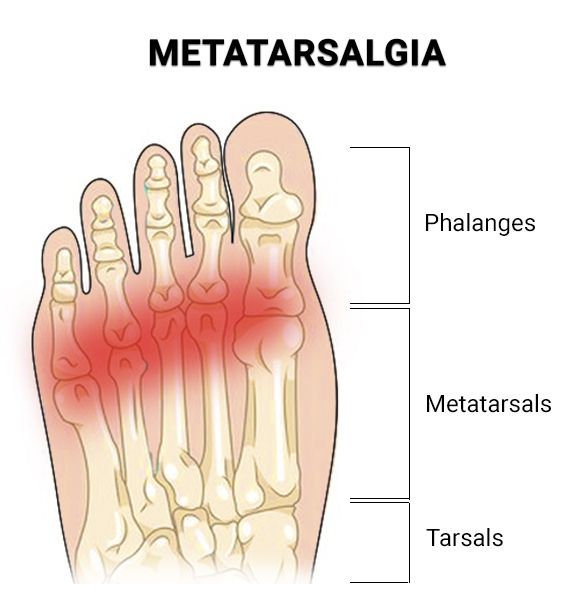
Table of Contents
Causes Of Metatarsalgia
Metatarsalgia refers to pain in the forefoot and can have many potential causes. To pinpoint the source of your discomfort, your podiatrist will conduct a thorough physical examination to assess the structures involved.
Common causes of metatarsalgia include:
- Joint inflammation
- Nerve compression or irritation
- Plantar plate (ligament) tears
- Bursitis
- Bone stress injuries
- Arthritic conditions
Contributing Factors To Metatarsalgia
Several factors may contribute to metatarsalgia, including:
- Sudden increases in physical activity: Engaging in more intense or prolonged activity than your body is used to can place excessive stress on the forefoot.
- Foot structure and function: The shape of your bones and joints, as well as how they move, can lead to uneven pressure and altered loading in the forefoot.
- Footwear: Shoes that fit poorly—such as those that are too narrow in the forefoot—or worn-out footwear can exacerbate pressure and stress on the forefoot.
Visit Us Today
Keperra
Phone: 07 3355 4082
Located Within Keperra Medical Clinic, 14 Dallas Parade Keperra QLD 4054
Coomera
Phone: 07 5638 5315
Located Within Doctors @ Coomera Central, Shop 6, 21 Coomera Grand Drive, Upper Coomera, QLD 4209
Marsden
Phone: 07 3067 2370
Located Within Marsden Family Doctors, Shop 28/55-77 Chambers Flat Rd, Marsden QLD 4132
Jimboomba
Phone: 07 5546 9766
Located Within Jimboomba Medical Centre, Unit 1/69 Cerina Cct, Jimboomba QLD 4280
Toowoomba
Phone: 07 4633 8700
Located Within Ochre Medical Centre Wyalla, Shop 20, 238 Taylor Street, Newtown QLD 4350
Symptoms Of Metatarsalgia
Common symptoms of metatarsalgia include:
- Pain in the ball of the foot, affecting any of the five joints
- Pain on the top of the forefoot
- Tenderness when touched
- A burning or throbbing sensation around the bony area of the ball of the foot
- Shooting pain that radiates into the toes
- Numbness or pins and needles in the toes
- Pain that worsens with standing, walking, or running
Managing Metatarsalgia
Given the variety of conditions that can cause metatarsalgia, obtaining an accurate clinical diagnosis is essential to ensure the correct treatment. Your podiatrist will conduct a thorough physical assessment of the affected area and have a detailed discussion with you about how the pain began and your symptom history. They will create a treatment plan tailored to your specific diagnosis, considering factors such as your activity levels, foot structure (bony alignment), and foot biomechanics (how your feet move).
Common treatment options include:
- Modifying weight-bearing activities
- Providing footwear advice
- Prescribing foot orthoses
- Recommending strength and mobility exercises
While waiting to see your podiatrist, you can take steps to manage your symptoms, such as resting from activities that aggravate the pain, applying ice to reduce inflammation and discomfort, and consulting your pharmacist about non-steroidal anti-inflammatory medications like ibuprofen. However, these are short-term measures, as symptoms are likely to return when you resume walking without addressing the underlying cause.
Enquire Now
Not The Condition You Are Looking For?
Find out more about the conditions we treat by clicking below.