
What Is Sesamoiditis?
Sesamoiditis causes pain at the ball of the foot, beneath the big toe joint. The sesamoid bones are embedded in a tendon, similar to the kneecap, and they help increase the leverage of the tendons that control the big toe. Because of their location and function, the sesamoid bones experience significant pressure and forces every time the big toe is used to push the foot forward.
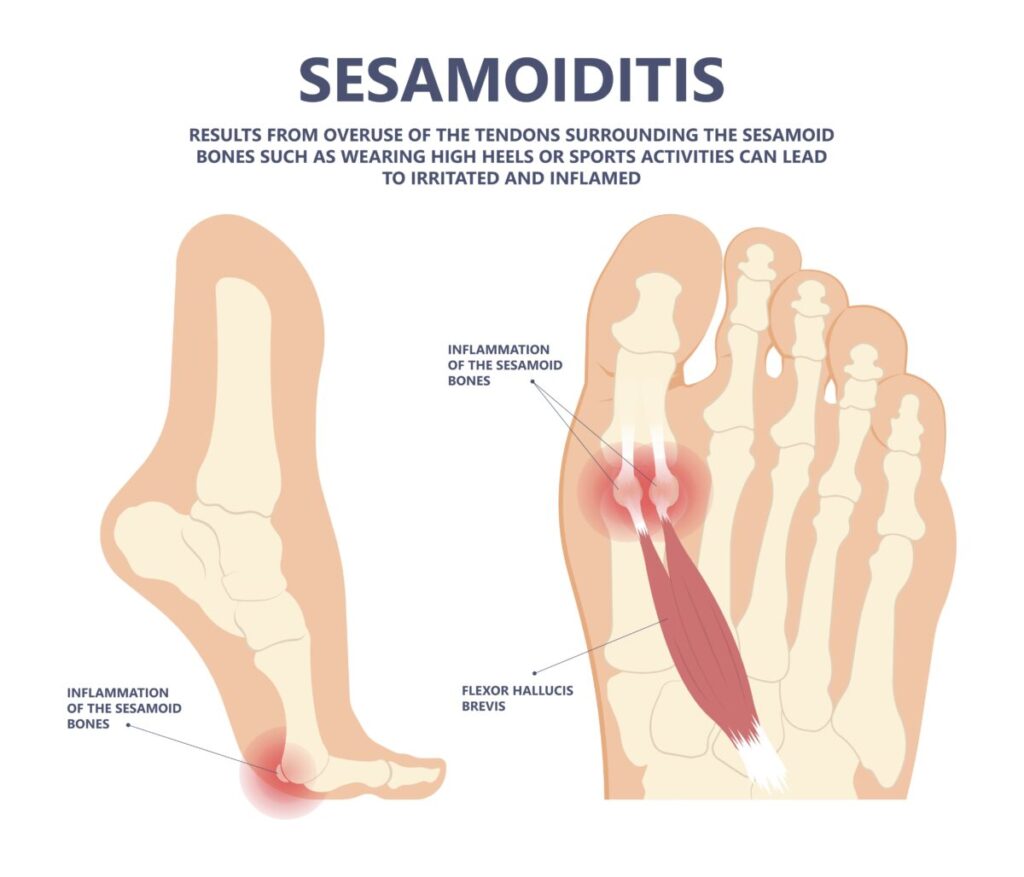
What Causes Sesamoiditis?
Sesamoiditis occurs when the sesamoid bones, two small bones located beneath the big toe joint, become irritated or injured due to overuse and repetitive impact.
Want this looked at? Our podiatrists can assess it and give you a clear plan.
Symptoms Of Sesamoiditis
The symptoms of sesamoiditis typically worsen gradually. What begins as a mild ache can quickly progress to intense throbbing. As the condition becomes more severe, it may become difficult to put weight on the big toe or walk comfortably. You might also notice swelling or redness around the big toe joint, along with pain when attempting to bend the toe upwards.
Injuries to the sesamoid bones can vary from mild irritation to a fracture. It’s important to seek early treatment to prevent the condition and pain from worsening.
Sesamoiditis affecting you?
You can book without a referral. If your GP has given you a care plan, bring it along and we’ll claim your Medicare rebate for you on the day.
Ask us about sesamoiditis
Not ready to book? Send us a message and our team will get back to you.
This page is general information only and isn’t a substitute for an assessment. If your symptoms are severe or getting worse, see a podiatrist or your GP. Browse all conditions we treat.